David Sullivan · 6 November 2026
Blending Tradition and Innovation: Village Workshops Address Climate Impacts on Farming
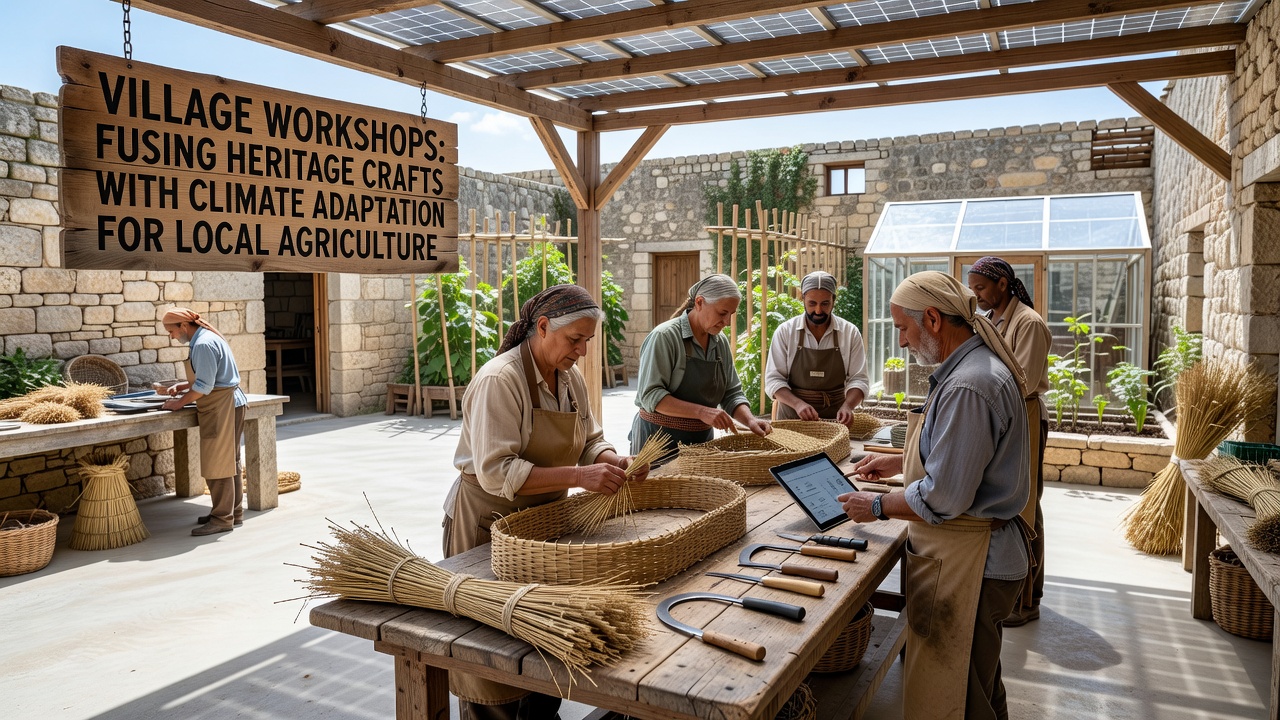
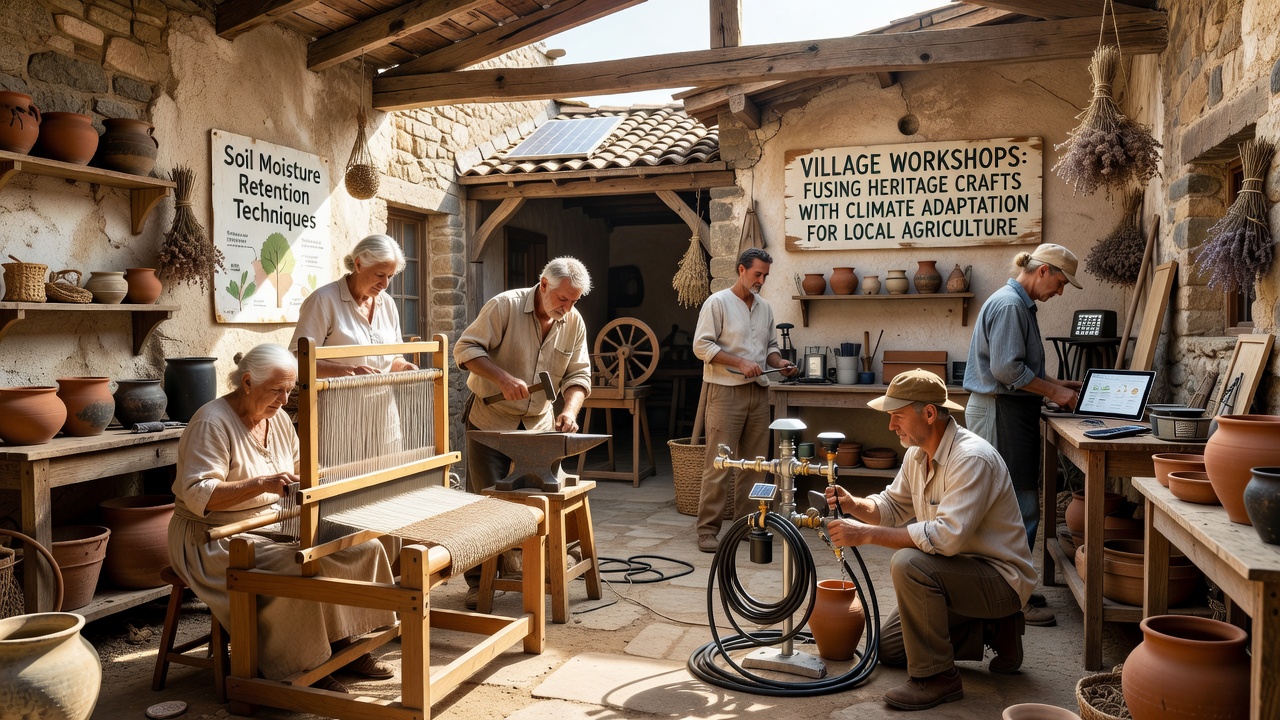
Communities across rural regions have turned to heritage crafts as practical tools for adjusting local agriculture to shifting weather patterns, and workshops in these areas combine skills like basketry, woodworking, and textile production with methods for soil retention, water conservation, and crop protection. Research from agricultural extension programs shows that such integration helps farmers build structures and tools suited to increased rainfall variability and temperature extremes, while data from regional monitoring stations indicate rising participation rates in these sessions since the early 2020s.
Workshops often start with demonstrations of historical techniques that participants then modify for current needs, such as creating woven barriers from local reeds to reduce wind erosion on fields or carving wooden frames for elevated storage that shields seeds from flooding. Observers note that these activities draw on knowledge passed through generations, yet they incorporate measurements from modern climate models to determine dimensions and materials. In one documented series of sessions held during 2025, attendees produced over 200 custom irrigation channels using split timber methods refined from older millwork practices, and follow-up surveys tracked improved water distribution efficiency on participating plots.
Workshop Formats and Participant Outcomes
Programs typically run in multi-day formats that mix hands-on crafting with discussions led by agronomists and craft specialists, where groups analyze local soil samples alongside historical records of land use to identify adaptations. Figures from community agricultural reports reveal that participants frequently apply these methods within the first growing season, leading to measurable reductions in topsoil loss during heavy precipitation events. Sessions scheduled for November 2026 in several villages will focus on textile-based covers for young plants, drawing from traditional quilting patterns updated with UV-resistant fibers to address prolonged dry spells.
Case examples from forest-edge settlements illustrate how these efforts connect to broader networks, as groups share patterns and material sources through regional cooperatives. One study coordinated by university researchers tracked 15 sites over two years and found that farms incorporating crafted windbreaks reported 18 percent higher yields in staple crops compared to control areas without such modifications. These results align with observations from similar initiatives in other temperate zones, where heritage approaches have been scaled to meet localized climate pressures.
Integration with Regional Agricultural Data
Local authorities compile data on workshop outputs and pair them with satellite imagery and ground sensors to assess effectiveness over time, and evidence from these combined sources indicates steady adoption of adapted tools across multiple districts. According to findings published by the European Environment Agency, regions employing craft-based adaptations show enhanced resilience metrics in areas prone to seasonal flooding and drought cycles. Workshops also emphasize material sourcing from sustainably managed woodlands, which ties directly into existing forest management plans that prioritize native species for durability under changing conditions.
Training modules cover the full process from harvesting raw materials to final installation, allowing participants to replicate and refine designs independently after the sessions end. Reports compiled by agricultural research institutes in Canada and Australia document parallel programs where traditional basketry techniques have been repurposed for drainage systems, yielding comparable improvements in field drainage rates during intense storms. These cross-regional comparisons help refine methods for specific soil types and crop varieties common in central European landscapes.
Long-Term Tracking and Knowledge Transfer
Follow-up evaluations occur at six-month intervals to record durability of crafted installations and any adjustments needed, and records show that many items last through multiple seasons with basic maintenance using the same heritage skills. Knowledge transfer happens through apprentice-style pairings within workshops, where experienced craftspeople guide newer residents in both technique and climate-specific applications. This structure supports continuity as weather patterns continue to evolve, with updates incorporated based on annual climate summaries from national meteorological services.
Conclusion
Overall, village workshops serve as hubs for merging established crafts with targeted agricultural adjustments, supported by ongoing data collection and inter-regional exchanges that inform refinements. Continued expansion of these programs through 2026 and beyond depends on sustained access to materials and expert facilitation, while measured outcomes from existing sites provide benchmarks for new locations considering similar approaches.