Ben Schulz · 20 November 2026
Rising Visitor Numbers Spark Advanced Biodiversity Tracking in Protected Woodlands
Protected woodlands across multiple regions have experienced steady increases in visitor numbers over the past decade, and this trend has prompted land managers to deploy more sophisticated biodiversity tracking systems that monitor species responses in real time. Data collected by forestry agencies show that annual footfall in many designated conservation zones rose by 25 to 40 percent between 2018 and 2025, with the sharpest spikes occurring during shoulder seasons when milder weather draws hikers, cyclists, and educational groups. Researchers note that these patterns coincide with broader shifts toward outdoor recreation following periods of restricted travel, and the resulting pressure on sensitive habitats has required new approaches to data collection.
Drivers Behind Increased Visitation
Population growth in nearby urban centers, combined with expanded public transport links, has made formerly remote woodland sites more accessible, while social media sharing of scenic trails amplifies awareness and draws additional groups each season. Government statistics from the European Environment Agency indicate that protected areas within a two-hour drive of major cities saw the largest gains, whereas more isolated sites recorded steadier but lower increases. Observers point out that families and school programs now account for a larger share of visits than in previous years, creating distinct usage peaks on weekends and during holiday periods.
Effects on Local Ecosystems
Repeated trampling along unofficial paths fragments understory vegetation, and noise from larger groups can alter bird nesting behavior in adjacent zones. Soil compaction measurements taken at several sites reveal reduced water infiltration rates that affect fungal networks supporting tree health. Studies conducted by university field teams have documented temporary drops in small mammal activity near high-traffic corridors, although some species adapt by shifting activity to dawn and dusk hours. These findings underscore the need for continuous monitoring rather than periodic surveys that might miss short-term behavioral changes.
Technology Upgrades in Tracking Methods
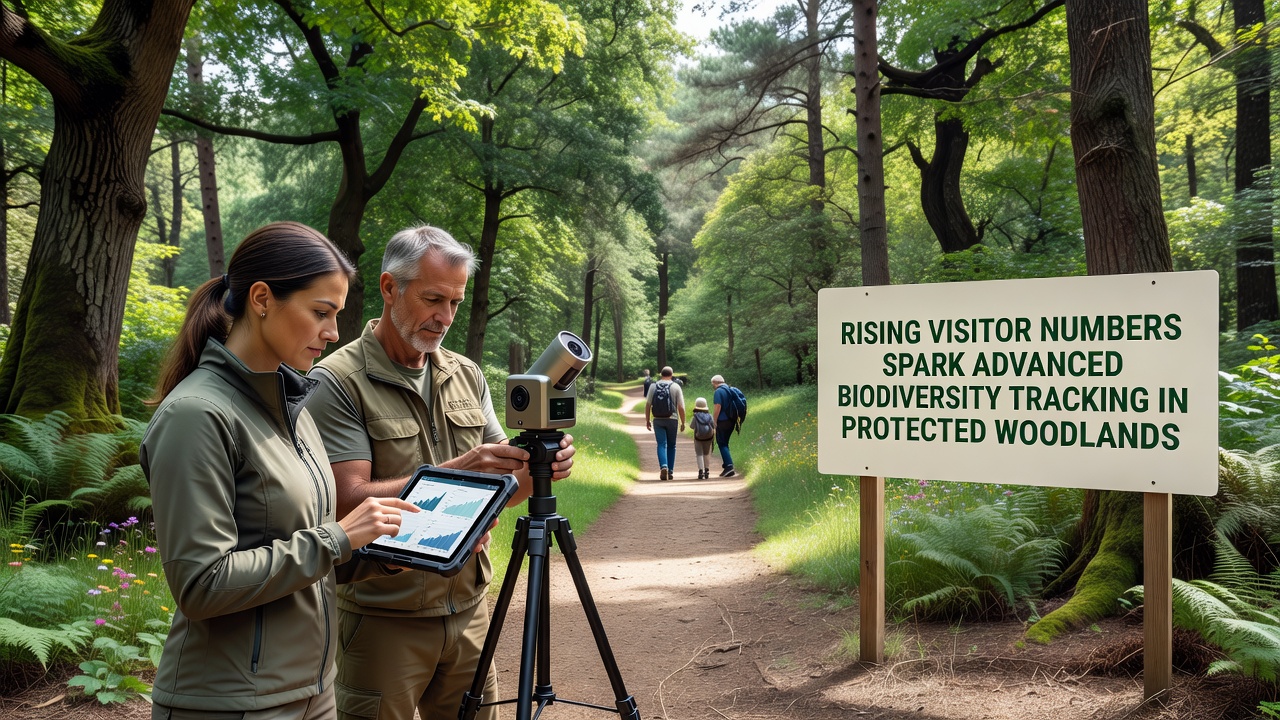
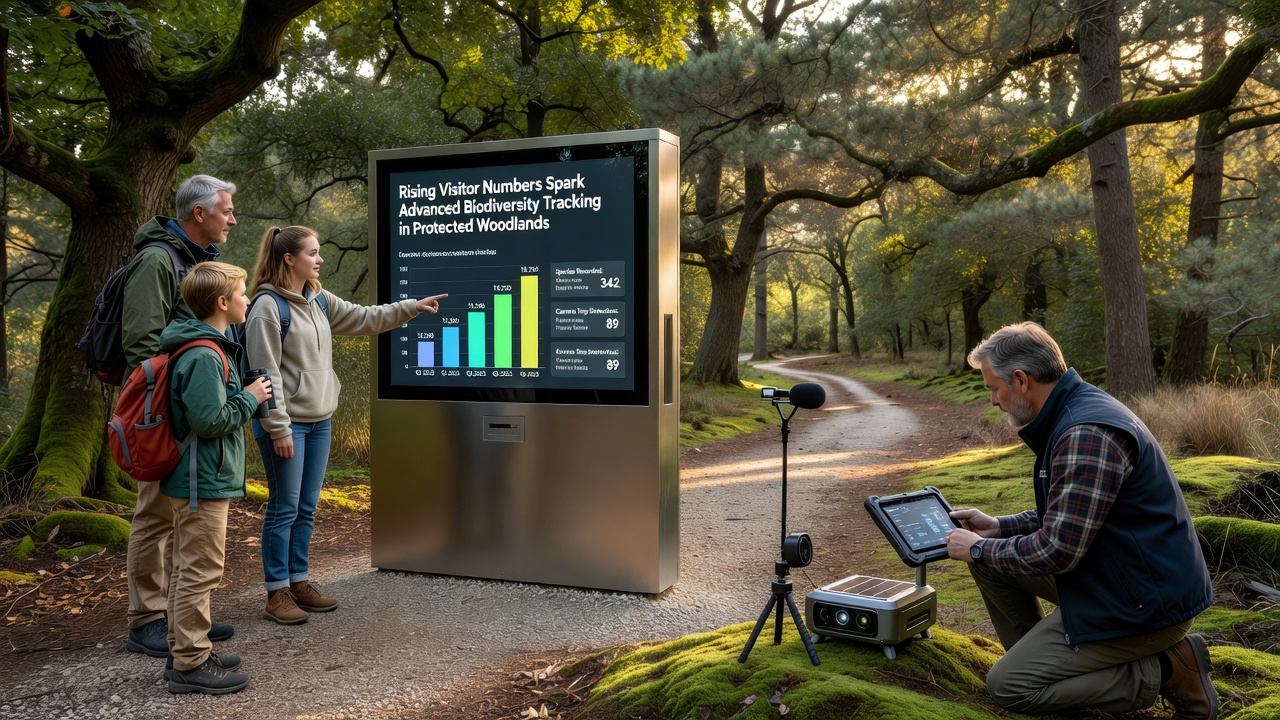
Land management authorities have moved beyond manual counts and camera traps toward integrated sensor networks that combine acoustic recorders, thermal imaging, and GPS-tagged collars on select species. In several woodland reserves, automated systems now transmit data hourly to central databases, allowing rapid identification of disturbance hotspots. One project initiated in late 2025 deployed arrays of vibration sensors along established trails to measure group sizes and movement speeds without direct visual contact. This approach reduces observer bias while providing finer temporal resolution than traditional line-transect methods.
November 2026 marks the scheduled rollout of an expanded monitoring grid across three contiguous protected woodlands, where officials plan to integrate satellite-derived vegetation indices with ground-level species data. The combined dataset will feed predictive models that forecast how different visitor management scenarios might influence breeding success rates for ground-nesting birds and amphibian populations. Early calibration tests completed during the preceding summer showed that the models accurately flagged zones where even modest increases in foot traffic correlated with measurable declines in invertebrate diversity.
Implementation Across Different Regions
Canadian provincial parks have adopted similar acoustic arrays in boreal forest reserves, while Australian state agencies have focused on drone-based multispectral surveys above eucalyptus woodlands to track canopy health alongside visitor flow data. These varied strategies reflect local ecology and regulatory frameworks, yet all share an emphasis on scalable, low-maintenance hardware that functions reliably in remote settings. European sites have emphasized cross-border data sharing protocols so that transboundary species movements can be tracked without duplication of effort.
Training programs for volunteer naturalists now include modules on interpreting real-time dashboards, enabling community members to contribute observations that complement automated feeds. In one documented case, a network of citizen scientists identified an unexpected concentration of bat foraging activity near a newly opened viewpoint, prompting managers to adjust lighting schedules and install temporary barriers during peak evening hours. Such collaborative efforts demonstrate how expanded tracking capacity can incorporate local knowledge without compromising data standards.
Future Monitoring Priorities
Authorities continue to refine algorithms that distinguish between different types of visitor impact, separating effects of concentrated versus dispersed use. Long-term datasets will soon allow comparison of biodiversity trends before and after the introduction of timed entry systems or designated quiet zones. Funding announcements from national conservation bodies indicate sustained support for sensor maintenance and data analysis through at least 2030, ensuring continuity in the records needed to evaluate management interventions.
Conclusion
Advanced biodiversity tracking has become a direct response to rising visitor numbers in protected woodlands, supplying the detailed information required to balance public access with species conservation. Integrated sensor systems, regional cooperation, and community participation together form the current framework for adaptive management, while scheduled expansions in 2026 promise further refinement of these methods. Continued investment in both technology and training will determine how effectively these woodlands maintain ecological integrity amid ongoing recreational demand.